
Middleborough Resident Lookup Sources
A Middleborough resident lookup works best when each source is used for its own narrow purpose. The assessor connects a recorded owner to a parcel, the Registry connects a party to a land transaction, and a court result connects a name to a case. The Town Clerk and state vital custodians hold different kinds of identity records. None of those sources creates a universal list of everyone at an address. Start with the record that fits the question and preserve the date shown by that record.
| Record | What it can confirm | Middleborough route | Access boundary |
|---|---|---|---|
| Assessor parcel | Assessed owner, situs, mailing address, and parcel clues | Middleborough Vision or MapGeo | Public property data; not every occupant |
| Recorded land index | Owner chain, parties, recording date, book/page, and legal description | Plymouth TitleView | Search and viewing are free; older books remain at the Registry |
| Voter status | An individual’s registration status using name, birth date, and ZIP | Secretary status form | Individual-use form; protected voter fields stay withheld |
| Court docket | Party, case number, venue, events, and public disposition | Massachusetts eAccess | Public index; documents and sensitive files vary |
| Vital index | Birth, marriage, or death name/date citation | Silvia Genealogy Room and state archives | An index is not a certified record |
| License or entity file | Public credential or recorded organizational role | eLIPSE and state corporations search | Public filing does not establish a home address |
Use property records first when the person may own a Middleborough parcel. Use the historical collections when the question concerns a past resident. A court or license result can resolve a name variant, but it does not prove present residence. That distinction keeps a resident lookup tied to the source rather than to a guess. The state voter form is an individual status check and requires all of the following inputs.
| Secretary status-form field | Required entry |
|---|---|
| First and last name | Enter the voter’s first name and last name. |
| Month, day, and year | Select the date-of-birth components. |
| ZIP code | Enter the five-digit ZIP for the residential address. |
| Agreement | Check the statement acknowledging the form’s individual-status purpose. |
| Search | Submit the completed form; dynamic result wording is not fixed in the research. |
Middleborough Court Name Checks
For a court-based resident lookup, use Massachusetts Trial Court eAccess and narrow the result before drawing any conclusion. The public screen offers Name, Case Type, Case Number, and Ticket/Citation Number tabs, alongside Court Department, Court Division, and, when applicable, Court Location. In a civil name search, the last name is required and must have at least two characters. A name hit places a party in a case, not at a Middleborough address.
Wareham District Court is the local district venue for Middleborough. Plymouth Superior Court and Plymouth Probate and Family Court also serve relevant matters, while a Brockton Probate and Family session can be the correct route for a particular file. The clerk or register is the source for a certified copy, a file not exposed online, or a question about a docket entry.
| Party identity | Last and first name, optional company name, party role, and repeated party rows. |
|---|---|
| Case placement | Case number, type, court/location, filing date, and docket-event identifiers. |
| Public substance | Available events and disposition, with document access varying by case and department. |
| Withheld material | Juvenile, sealed, impounded, expunged, adoption, and protected family records may not appear. |
Note: A court location identifies the venue for a case, not necessarily where a party lives.
Middleborough Vital Record Paths
A name and an event date can be checked against the Silvia Genealogy Room’s Middleborough vital index for 1649–1945 or the Massachusetts Archives citation search for 1841–1910. Those tools supply an identity lead, often a name, place, and volume/page citation. They do not substitute for the record custodian. The Archives holds Massachusetts birth, marriage, and death records from 1841–1935, while the Middleborough Town Clerk and the Registry of Vital Records and Statistics handle different current-copy routes.
The state certificate-order instructions show online or phone ordering, mail, and in-person channels. Middleborough can issue qualifying local copies. For the historical archive period, the Archives accepts mail, email, and in-person requests, and may provide up to five unique record images by email at no charge. Certified archive copies are $3 each, with a possible twelve-week processing period. Current restrictions and genealogy thresholds still matter.
The official state order screen is shown in the Massachusetts certificate-order route.
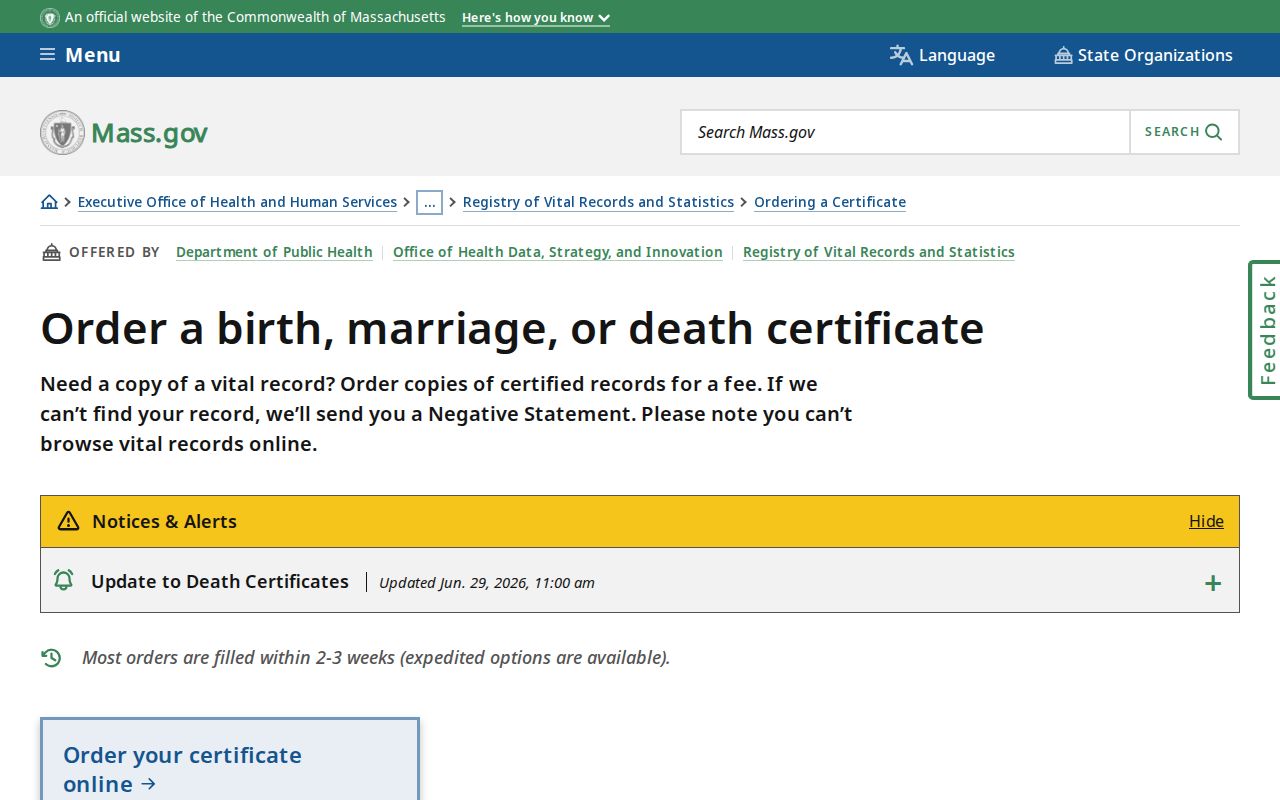
That distinction matters in a Middleborough resident lookup: a public citation can guide a request, while the actual certificate may require eligibility or a different custodian.
The Massachusetts Archives vital-record citation search presents the historical search route before a copy is requested.
When a record predates the state registration period, combine the Town Clerk, library local-history room, church or meetinghouse registers, cemetery sources, newspapers, and probate rather than assuming an online index is complete.
Verifying a Middleborough Resident
Verification means testing a match across independent records with dates that make sense together. A spelling match alone is weak. An assessed owner may use a mailing address elsewhere, an old directory can capture a past household, and a docket may concern a party with the same name. Compare a Middleborough address, a time period, a family detail, and the record type before deciding the entries describe one person.
- State the exact question and date, such as whether a person held title to a parcel in a given year.
- Search Vision or MapGeo by name or address, and record both the situs and mailing address without treating either as a household list.
- Confirm the land transaction in TitleView by comparing the party names, recording date, document details, and legal description.
- Use eAccess for a name variant only when a court question is relevant, then capture the court, case number, role, and disposition.
- Use a vital index, Gazette item, or probate record to test dates and family relationships. Request a certified copy from its custodian when one is needed.
- Docket
- The court’s running list of filings, hearings, events, and outcomes in one case.
- Index versus image
- An index points to a record through names and reference details; an image is the scanned record itself and may have separate access rules.
- Certified copy
- A custodian-issued copy that carries the office’s certification, unlike a search result or library citation.
For a property question involving several addresses, the broader chain belongs with the Middleborough by-street directory; it should not be inferred from one owner name.
Middleborough Probate and Heir Trails
Estate research is one of the clearest reasons to use several records together. Begin with a death notice or vital-index clue, then search the probate docket and file for the decedent, fiduciary, heirs, witnesses, residence, and property references. Recorded deeds and releases can then connect an estate name with a transfer. The historical Plymouth estate collection on FamilySearch covers 1686–1915, while newer probate questions belong with the Probate and Family Court register.
Library collections can help when a person disappears from current sources. Silvia Genealogy Room materials include a 1946 telephone book, selected directories, Gazette index, cemetery material, and local-history boxes. Those are useful time markers. A directory entry, obituary, or newspaper notice still needs a probate file, vital record, or recorded document for formal verification.
Note: A spouse, parent, address, and event date together are stronger identity checks than a shared surname.
Middleborough License and Filing Checks
Public licensing and entity filings can provide a useful second identifier in a resident lookup, especially where a person has a public professional role or a recorded business affiliation. The state’s eLIPSE license search has Person and Business tabs with first, middle, and last-name fields, plus city, state, ZIP, board, license type, and license number. Results identify the name, board, license type and number, status, location, and a link to license detail.
The Secretary of the Commonwealth’s Corporate Database can show an entity’s public filing trail. A Town Clerk business certificate is a separate local registration, with a $40 fee and four-year term through the counter or mail route. A registered office, agent address, or business address is a contact from the filing, not proof of a private residence.
The Massachusetts Sex Offender Registry Board information page describes the public-information route for level 2 and level 3 information and its town or personal-information search context.
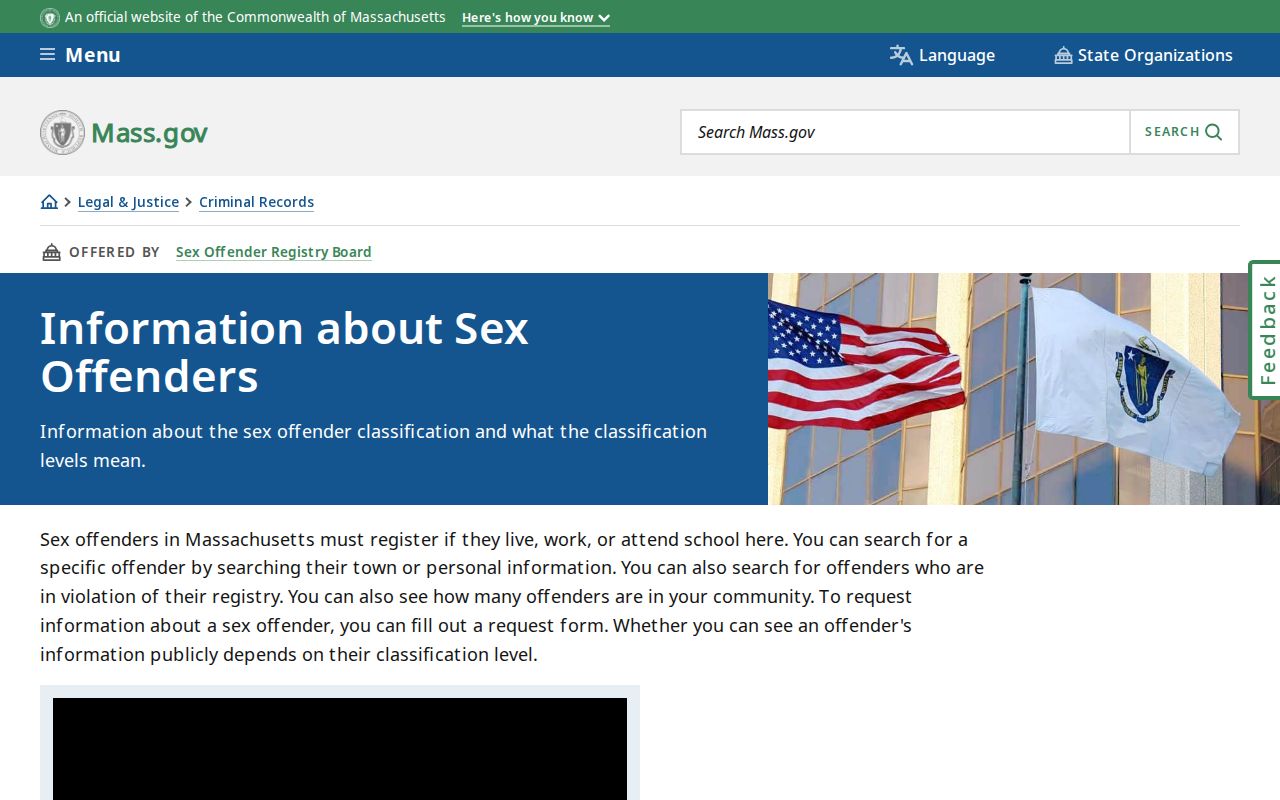
Keep this type of record separate from property or voter evidence. A public registry result has a defined purpose and cannot establish every fact about a person’s current household.
Resident Lookup Privacy in Middleborough
Middleborough records have real limits. The Massachusetts Address Confidentiality Program can provide a substitute address for eligible survivors and other qualifying people under G.L. c.9A and 950 CMR 130.00. Court procedures can impound an ACP participant’s actual address. Confidential-voter rules also protect qualifying voters, and the shelter address in that process is never public. Missing information may be protected, restricted, or simply outside the coverage of a particular record.
Motor-vehicle personal information has separate federal DPPA limits. Vital, court, voter, and recorded-document rules also have their own restrictions. If an official record appears wrong, ask the office that holds it about correction procedures. A copied commercial listing will not control the custodian’s record.
Lawful use. Use Middleborough resident lookup records for personal, lawful research. Using public facts to stalk, harass, threaten, or intimidate anyone can create criminal or protective-order consequences under Massachusetts law.
Middleborough Records Request Fallback
When a portal does not show the needed record, name the custodian and make a focused request. Middleborough’s Town Clerk keeps local vital certificates, annual census, elections, licenses, and municipal records. A request should identify the person or address variant, record type, date range, preferred format, and contact information. For municipal public records, Massachusetts Public Records Law, M.G.L. c.66 §10, generally calls for an initial response within ten business days and normal municipal production within twenty-five business days.
Ask the office to identify the applicable exemption when material is withheld. Public-record exemptions in G.L. c.4 §7(26), privacy rules, and record-specific statutes can all matter. The Supervisor of Records is the appeal route described in the statute. A request can seek an existing record; it does not require the Town to create a new list of Middleborough residents.